Mission Check EV
Know the vehicle.
Know the battery.
Know the job.
Then know what happened.
Record the real journey. See what the battery delivered. Compare expected with actual.
Run a buyer missionFour things. One real duty.
Battery+−
Mission Check EV separates what is documented, estimated, observed and vehicle-derived. State of health, degradation and usable capacity stay ‘Not verified’ when the evidence cannot support them.
Range+−
The answer considers the specific vehicle, expected weather, route, reserve and available evidence instead of relying on one headline range figure.
Charging+−
Documented and observed charging can be recorded against the duty. Live charger availability is not included and is never implied.
The job+−
The platform tests the vehicle against the work it must perform, including relevant payload, passenger, auxiliary-use and operating-condition inputs.
Vehicle and battery evidence here. Vehicle-to-job decisions in Mission Check.
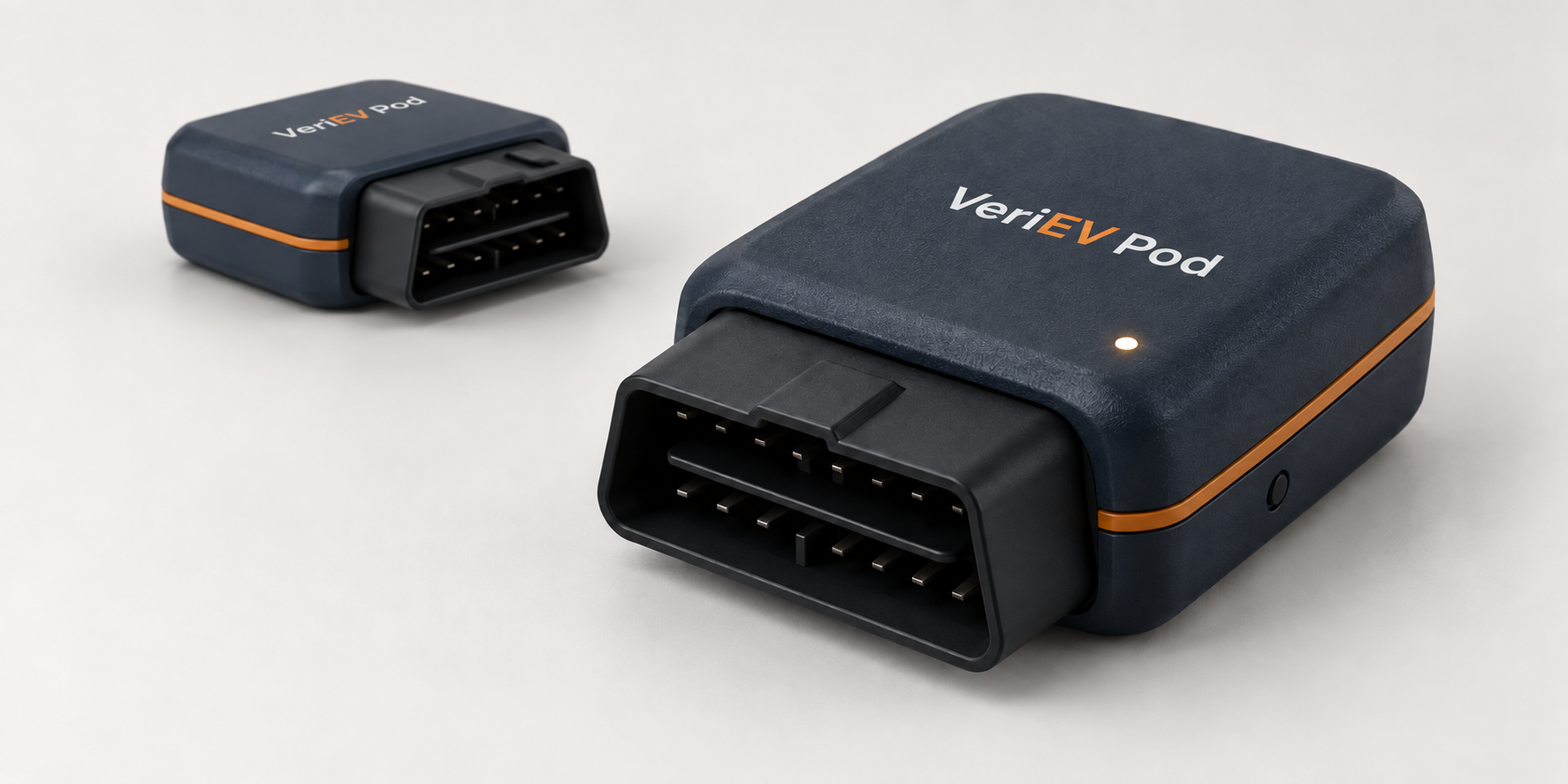
Evidence at the vehicle.
The Mission Check EV Pod is a read-only vehicle-data device in controlled development. Journey capture and Battery Reports are available now.
Meet the PodPatent application in preparation. No application has yet been filed.
Patent application in preparation. No application has yet been filed. No patent rights are claimed.
Evidence & limitsKnown, estimated or missing. Nothing overstated.+−
Answers come as bands with a confidence level. Anything unavailable stays “Not verified”.
0 · Insufficient evidence. The available information cannot support a conclusion.
1 · Profile estimate, not a measurement. Published or operator-supplied profile data supports an estimate only.
2 · Observed journeys and charging. Recorded real-world outcomes add evidence about how the vehicle performs.
3 · Vehicle data: BMS, OBD or telematics. Supported, validated vehicle-derived data with retained provenance.
4 · Independently tested. Evidence produced through an appropriate independent test and methodology.
Level 3 requires supported, genuine vehicle data, retained provenance and validated parsing associated with the correct vehicle and session. Pod readings do not create Level 4 evidence. Live charger availability is not included.
Read the method →Working vehicles & real outcomesPredict → Operate → Observe → Improve+−
- Panel vans: Cargo, multidrop and specialist load work.
- Crew vans: People and equipment on the same journey.
- Taxis and private-hire cars: Ordinary electric cars too — saloons, hatchbacks and SUVs doing intensive shift work.
- Wheelchair-accessible vehicles: Ramps, lifts and restraint equipment carried.
- Minibuses: School runs, contract duties and community transport.
- Electric trucks: Payload, route, terrain, equipment and charging access.
- Service and specialist vehicles: Tools, auxiliary power and standing loads.
- Predict: Will this vehicle complete this duty with the required reserve?
- Operate: Run the real journey with its actual load, passengers and conditions.
- Observe: Record energy use, arrival charge, charging, delays and interventions.
- Improve: Compare the prediction with the outcome and improve confidence for comparable duties.
Arrival ID captures the operational location information a working job needs — including arrival, access, collection and handover points.
Illustrative working-EV duties
IllustrativePanel van
A loaded panel van
View example +
760 kg of pallets, 118 miles with a return leg, motorway-weighted, 4 °C. The load and the cold both raise consumption, so the check reports the minimum sensible starting charge rather than a single range figure.
Crew van
A crew van carrying six people
View example +
Six people, tools and materials — roughly 450 kg before cargo. Passenger weight is counted as payload, and repeated site stops with cabin heating on are added to the energy band.
Taxi or private hire
A taxi or private-hire shift
View example +
A saloon, hatchback or SUV on a ten-hour shift, including dead mileage, waiting time, cabin climate use and charging access. These tailored inputs are supported today.
Minibus
An electric minibus duty
View example +
Two school runs, passengers, luggage, cabin heating and a mid-duty parking window. These tailored duty inputs are supported today.
Electric truck
An electric truck route
View example +
Relevant inputs include payload, duty distance, stops, terrain, auxiliary equipment, refrigeration or tail-lift use and charging access. Truck-specific calculation is not yet validated, so no suitability result is produced.
Accessible or specialist
A wheelchair-accessible or specialist duty
View example +
Wheelchair-accessible duties can include passengers and equipment today. Other specialist duties can be recorded, but require category-specific validation before a suitability result is produced.
Examples only. Every figure in a real Mission Check EV check is supplied by the operator or observed on a recorded journey, and the result states which.
Available now & Pod developmentThe platform works without hardware.+−
- Vehicle profiles and Battery Reports
- Evidence levels and confidence
- Quick Check, Journey Check and Job Check
- Manual, documented and observed evidence
- Drive and Charge evidence capture workflows
- Dealer and fleet organisation accounts
- Pilot applications and Buyer Check sharing
- Arrival ID location and handover links
- Read-only operation, with no vehicle write commands
- Never changes vehicle settings or clears fault codes
- Every reading keeps its provenance
- Secure association with the correct vehicle and session
- Explicit, user-controlled connection
- Supported vehicles and adapters only
- Simulator data always visibly marked as simulated and cannot be published
- Manual evidence retained when hardware is unavailable
There is no production hardware, validated diagnostic accuracy, universal compatibility or manufacturer data access. Encrypted transfer, offline-capable capture and validated model-specific connections remain development objectives, not finished features. Pilot applications are reviewed; applying does not guarantee acceptance.
Apply for a controlled pilot