Mission Check EV technology concept
Evidence from the vehicle. Confidence for the job.
Mission Check EV Pod is a proposed secure evidence recorder for working electric vehicles, being designed to help vans, taxis, private-hire cars, minibuses and specialist vehicles contribute permitted vehicle data to their Mission Check EV Duty Twin.
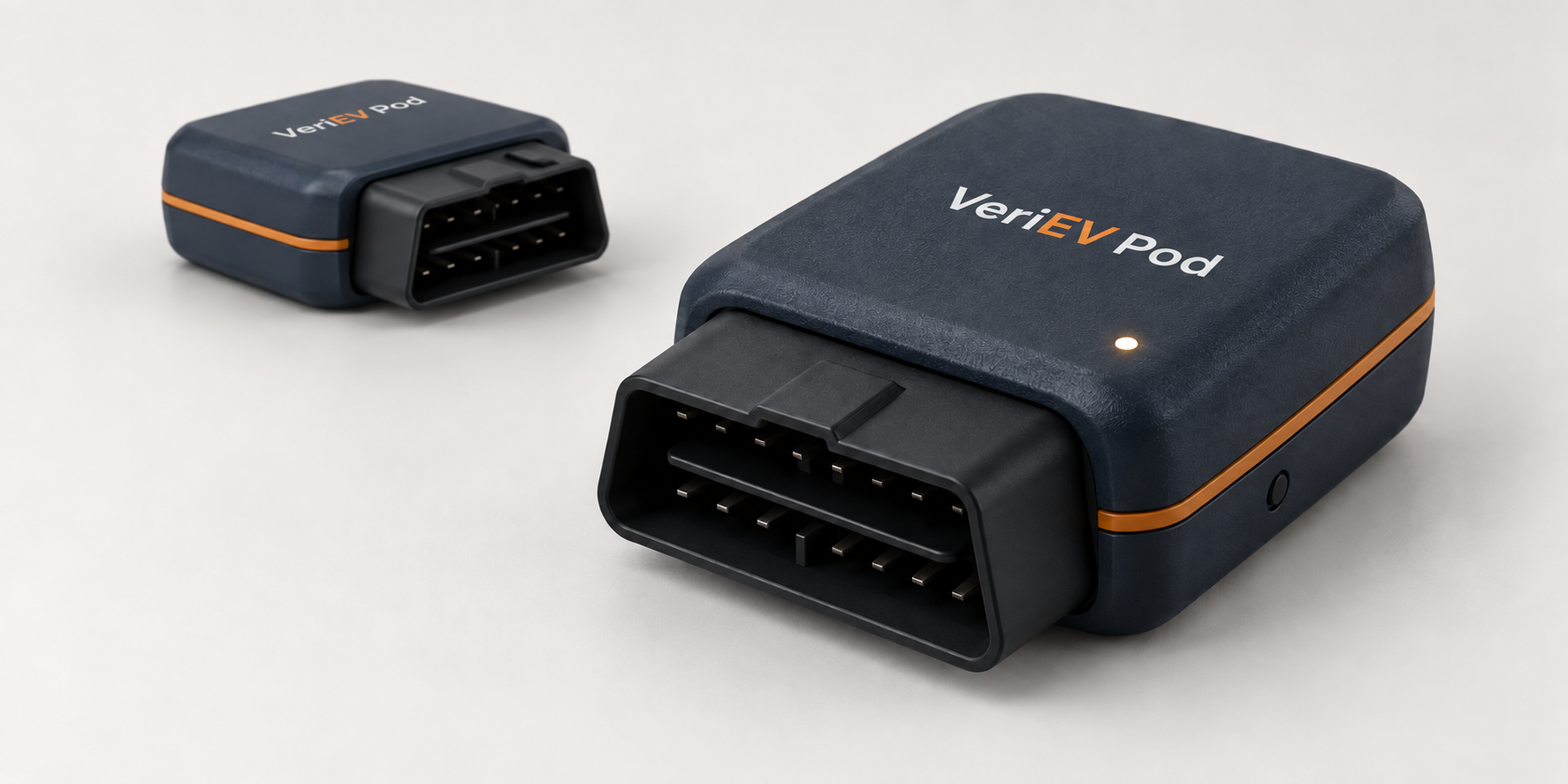
The brochure cannot tell you what this vehicle can do today. The Pod is the doorway to battery evidence, working load, weather, charging behaviour and the shifts actually completed — the Mission Check EV Pod name is not claimed as a trademark.
How it would work
1. Capture evidence
The proposed Pod records permitted readings made available by a compatible vehicle.
2. Build the Duty Twin
Mission Check EV combines vehicle evidence with journeys, charging, passengers or payload, conditions and after-job outcomes.
3. Support decisions
The system estimates duty suitability, charge requirements, expected reserve and confidence, without presenting estimates as certified measurements.
Proposed outputs
- State-of-charge evidence
- Observed energy consumption
- Charging-session evidence
- Temperature context
- Predicted versus actual reserve
- Vehicle-specific Safe Working Envelope
- Battery and duty trends over time
- Buyer, driver and fleet reports
Trust by design (objectives)
- Secure device identity
- Encrypted evidence transfer
- Allowlisted read requests only
- No vehicle coding or control commands
- Evidence source and timestamp on every reading
- Confidence bands rather than false precision
- Explicit driver or fleet consent
- Data deletion and access controls
More than a diagnostic dongle
The proposed hardware is the evidence doorway. Mission Check EV's long-term advantage is the history connecting a particular working EV, its battery and charging behaviour, the duties it attempts and the work it successfully completes.
Authenticated evidence
Readings tied to a particular device, vehicle and moment in time.
Vehicle compatibility knowledge
What each model actually exposes, mapped responsibly.
Duty-outcome dataset
Battery and energy evidence against work the vehicle really completed.
Licensable decision models
Duty suitability and evidence confidence, offered through an API.
Intellectual property
The Mission Check EV platform, evidence model and operational dataset are developed and retained by One Fleet Technologies Ltd. Patent protection is being assessed and prepared for elements of the Mission Check EV Pod and its vehicle-evidence capture system.
Patent application in preparation. No application has yet been filed.
Unpublished engineering diagrams, proposed patent claims, internal algorithms, connector details, thresholds, data-mapping logic and other confidential technical information are not disclosed on this website.
Where it would be used
- Delivery and service vans
- Crew vans
- Taxi and private hire
- Minibuses and accessible transport
- Used-EV buyer checks
- Fleet replacement and resale decisions
Development sequence
- Current
Software validation using compatible third-party adapters.
- Next
Controlled VP-1 engineering prototypes.
- Pilot
Selected drivers, fleets and dealers.
- Later
Compliant production hardware and licensed Mission Check EV APIs.
Investor and pilot enquiry
Concept stageStatus, limits and sources+−
Mission Check EV is developed by One Fleet Technologies Ltd, a company registered in England and Wales. Mission Check EV is a trading name and product of One Fleet Technologies Ltd.
Not every output is available for every vehicle. Data access and compatibility differ by manufacturer and model, and state-of-health access is never promised.
Trust features listed above are design objectives, not implemented or independently validated features.
No launch dates, prices, pilot partners, performance results or manufacturing arrangements are published, because none exist. Mission Check EV Pod is currently a research and industrial-design concept — not yet manufactured, certified, available for sale or proven compatible with any named vehicle.
Working today: check a duty or read the method.